Home / Gypsum Powder Production Line
Gypsum Powder Production Line
WUXING PRODUCTION EQUIPMENT
Gypsum Powder Production Line
A coordinated production system for transforming gypsum stone into powder through crushing, grinding, classification and calcination.
- Coordinated material handling
- Powder classification and recirculation
- Equipment selection for your raw material
PRODUCT DESCRIPTION
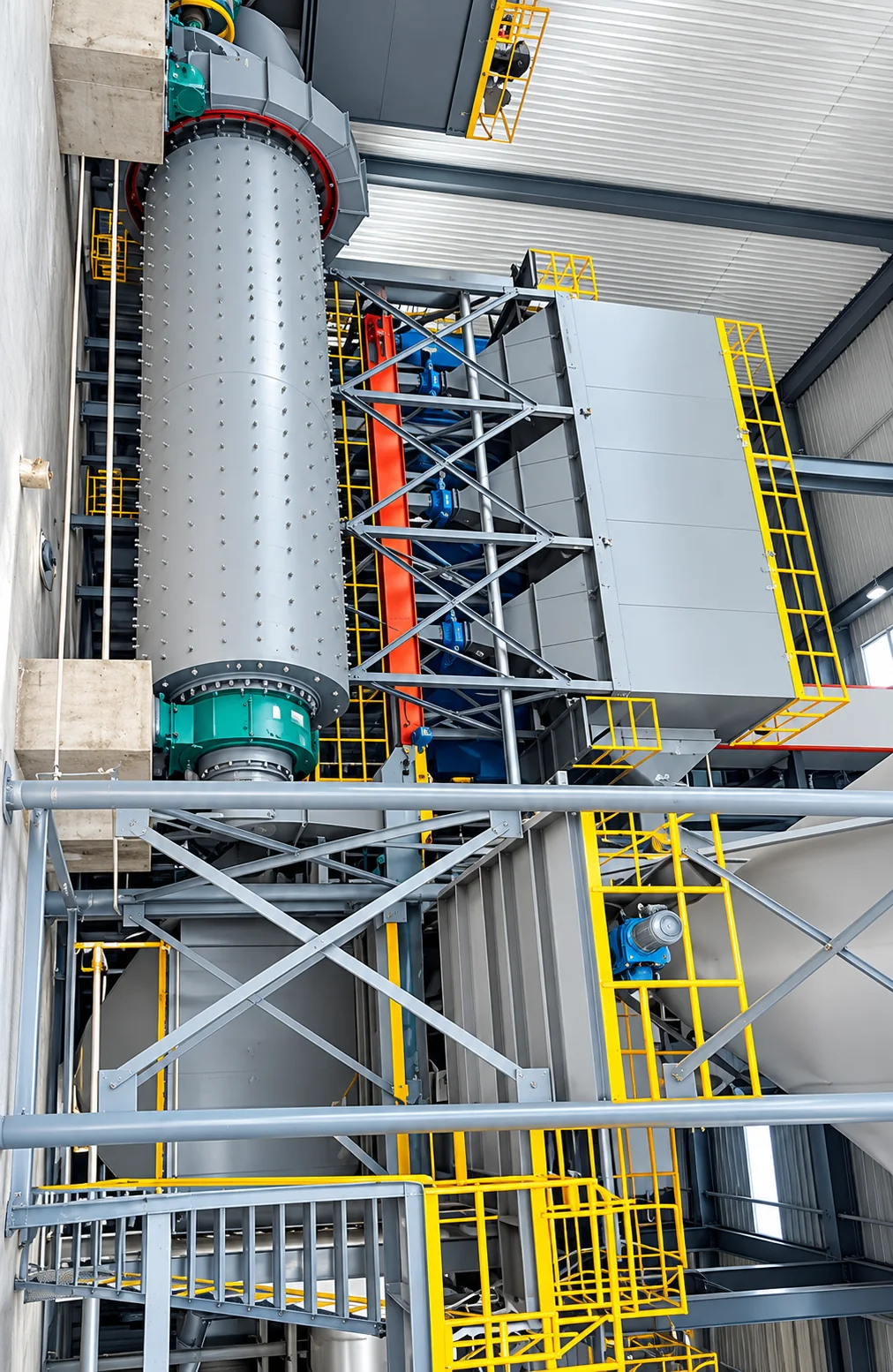
A coordinated plant for building-gypsum powder
The equipment converts natural gypsum into β-hemihydrate for plaster, blocks and paper-faced board production. The example below is a 150,000-tonne annual design; it is not a capacity claim for every configuration. Material analysis and the intended finished powder determine the final equipment selection.
Technical specifications
| Parameter | Specification |
|---|---|
| Example annual output | 150,000 tonnes |
| Nominal production rate | 21 tonnes/hour |
| Design operating time | 7,200 hours/year |
| Raw gypsum purity | Dihydrate content above 85% |
| Attached moisture | Below 4% |
| Maximum incoming rock size | Below 400 mm |
| Indicative ore consumption | 1.20 tonnes per tonne of product |
| Indicative heat demand | 240,000 kcal per tonne of product |
| Fuel choices | Natural gas, coal, diesel or heavy oil |
Design-basis figures depend on feedstock and operating conditions.
Production flow
Crushing → Grinding → Classification → Calcination → Storage and packaging
Processing and material handling
Crushing prepares the rock for a Raymond or vertical mill. Classified powder enters a fluidized-bed calciner; cooling then reduces its temperature below 80°C before storage and aging. Conveyors, silos and packaging connect these stages.
Control and dust collection
Central controls monitor operating conditions. Dust collection serves the handling and processing equipment, while the heating arrangement can incorporate recovered heat.
Choose the powder specification first
The wider product range includes natural and desulfurized gypsum feed routes. The published range is 50,000–500,000 tonnes annually. Different fineness ranges are described for different processes, so the required particle-size distribution must be agreed for the selected application. A feed route for wet desulfurized gypsum also needs its drying requirements reviewed.
Prepare a comparable proposal
Provide a representative material report and explain how the powder will be used. Request a written distinction between nominal output and expected saleable output, along with the assumptions behind consumption estimates. Identify whether the project ends at bulk storage or includes bagging, dispatch and integration with another production line.
Request a project proposal
Send the following details to help us understand your requirements:
- Feedstock source, analysis and moisture
- Required fineness and setting behaviour
- Annual output and operating schedule
- Bulk or bagged dispatch and local fuel availability
Technical reference information
Published configuration details used for this overview. The final technical offer defines the equipment supplied.
Frequently asked questions
What is the price of this production line?
Price is quoted for the agreed equipment scope, automation, installation support and delivery terms. No fixed price is published. Send your product specification and site information for an itemized quotation.
What is the power consumption?
Installed power and operating consumption must be confirmed in the technical offer. Ask for both the connected load in kW and estimated energy use per unit of finished product, including auxiliaries.
Is the layout drawing ready for construction?
No. The drawing is a conceptual process layout, not to scale. Foundations, clearances, utilities and equipment dimensions require a project-specific engineering drawing.
How do I request a quotation?
Send the intended product dimensions, target output, raw-material details, factory drawing and available utilities to sales@gypsumboardmachinery.com.